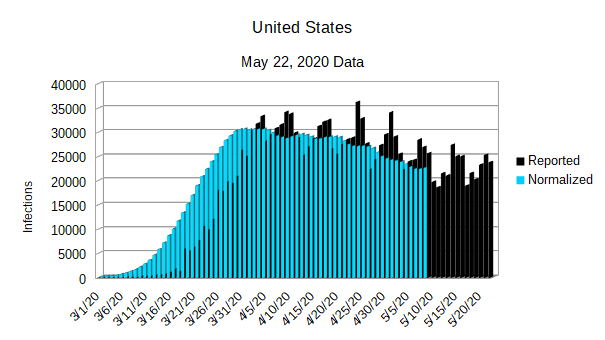
We continue to reduce our overall number of Covid-19 cases in the United States. This is in large part due to the dramatic progress that has been made in New York and New Jersey. If those two states are removed from the totals, the Covid-19 cases in the United States is about holding steady.
Another good point that is shown in the data is that every state has been able to break the exponential growth curve even if some of them are still trending upward in their daily infection rates.
Continuing with the good news, there is now enough data to indicate that beginning to reopen the states hasn’t had an overly negative influence in the infection rate of Covid-19. While some states have had an increased number of daily infections, other states have either held steady or continued to reduce their daily infection rates.
Now for some bad news. It doesn’t look like the Covid-19 infection is going away any time soon. The data indicates that the infections will continue to spread throughout the United States into the foreseeable future.
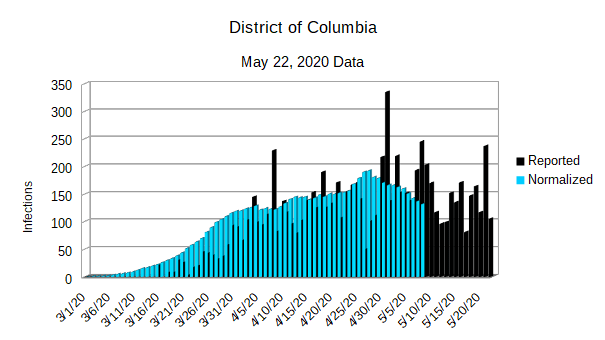
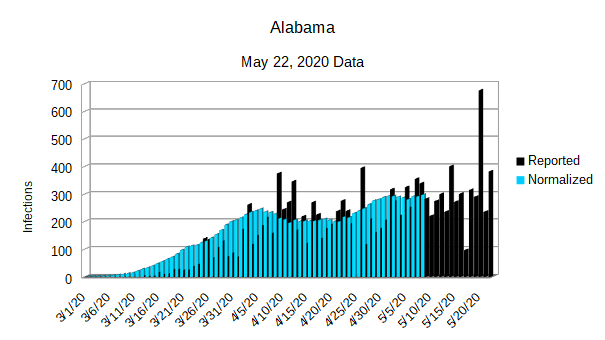
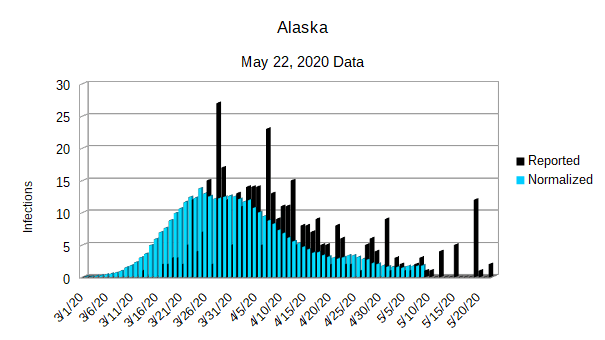
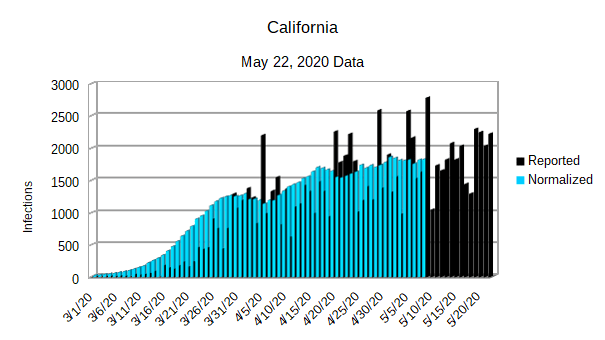
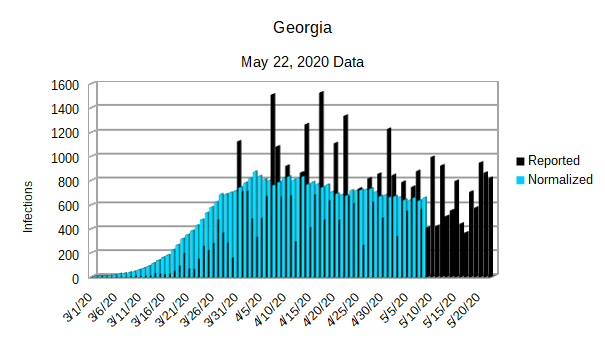
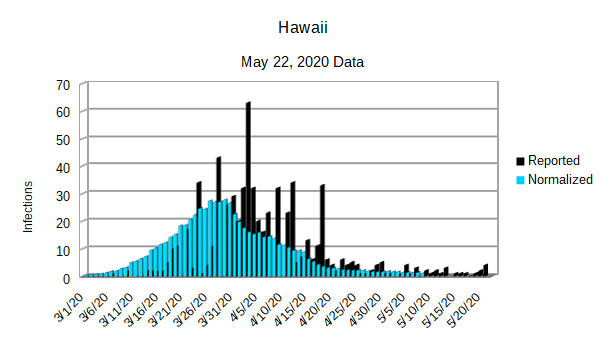
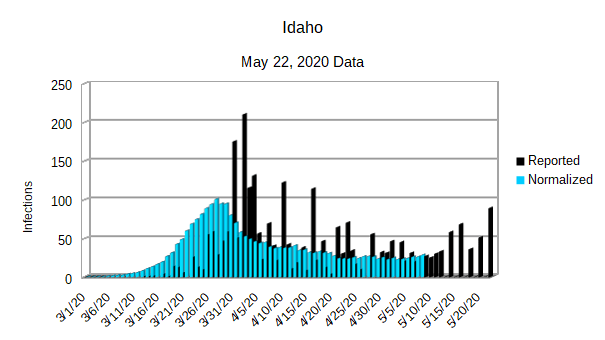
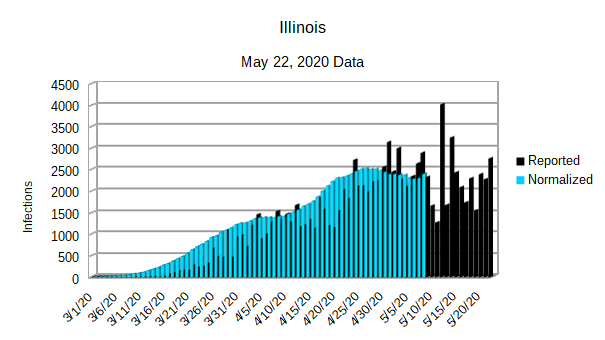
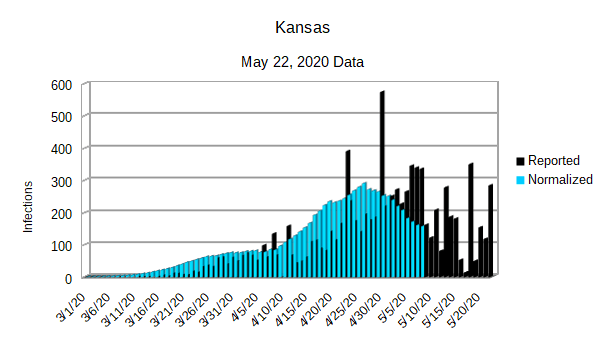
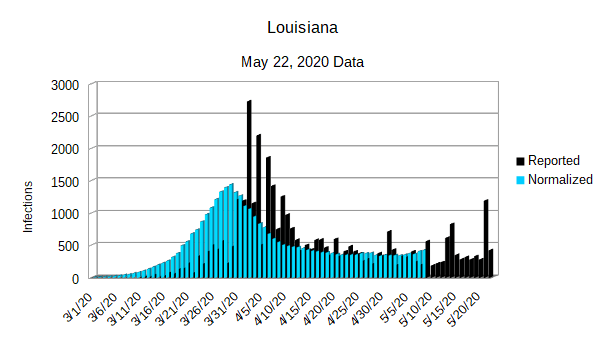
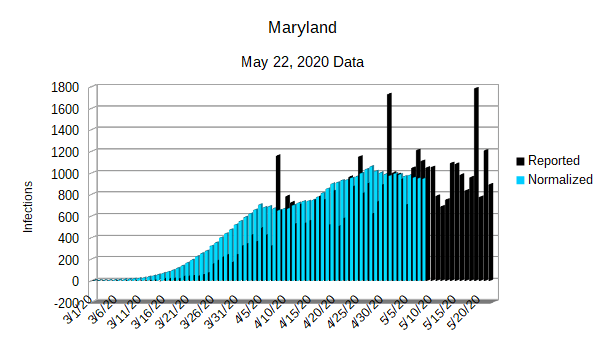
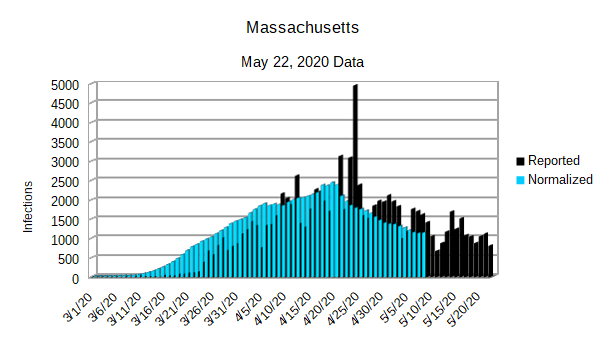
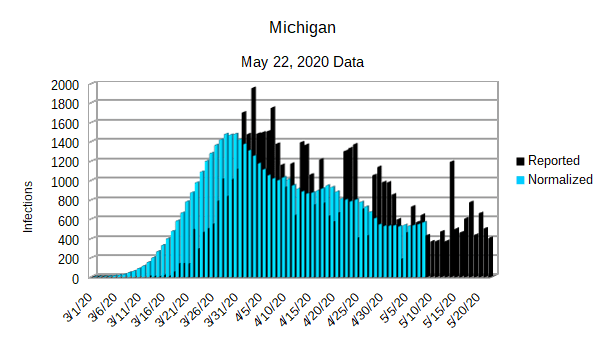
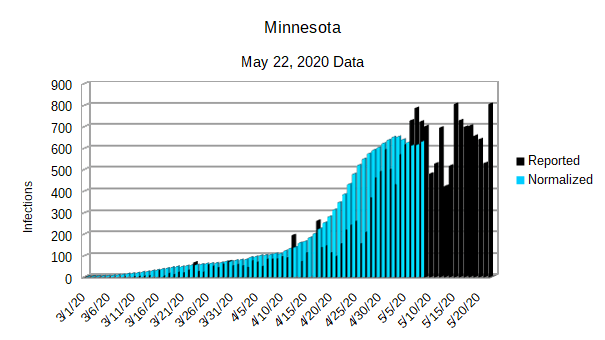
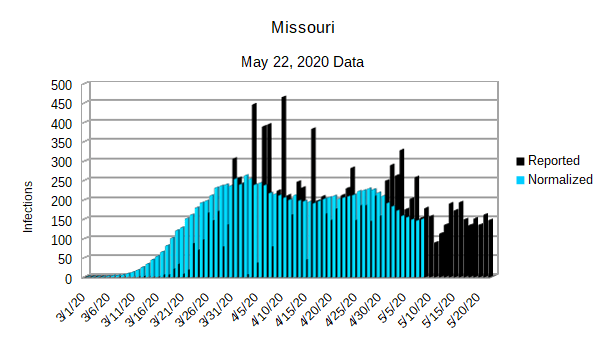
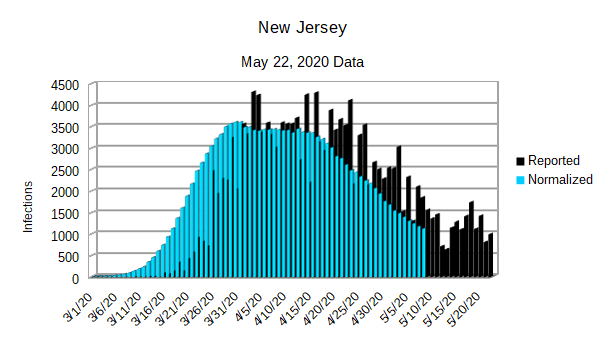
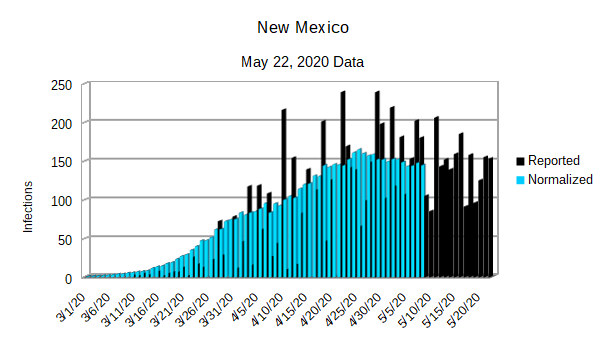
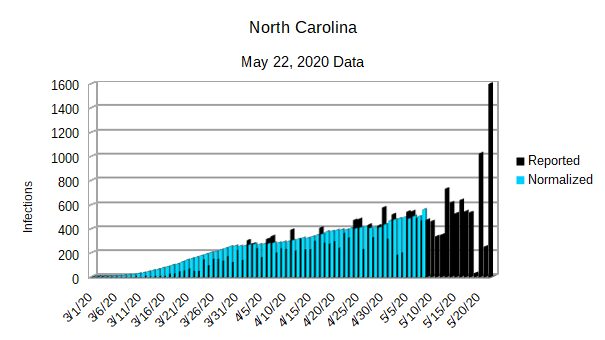
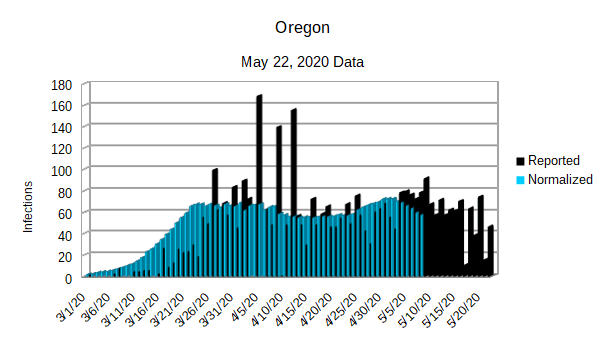
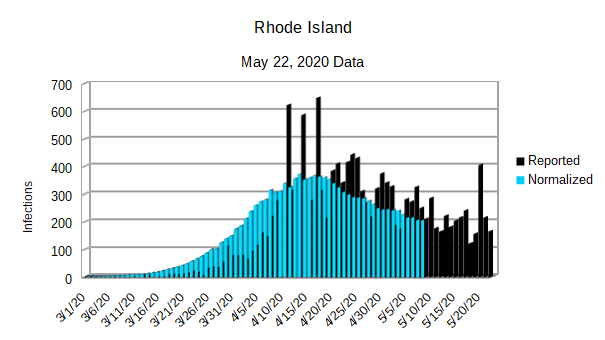
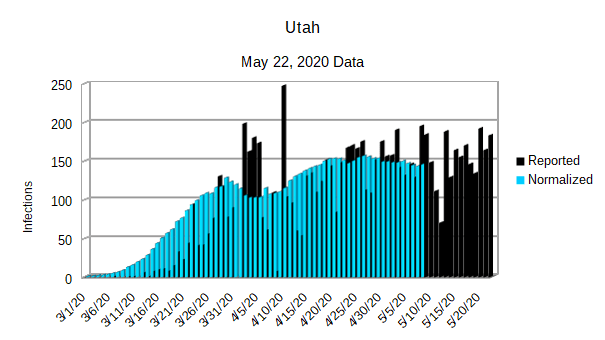
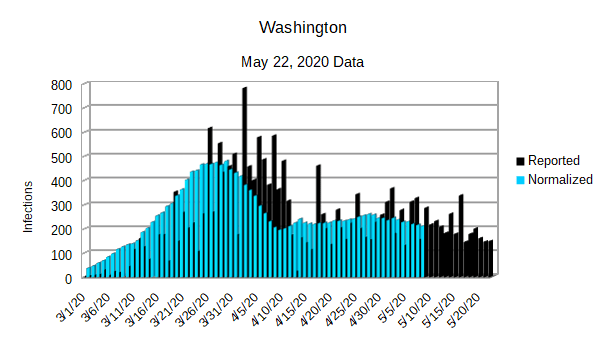
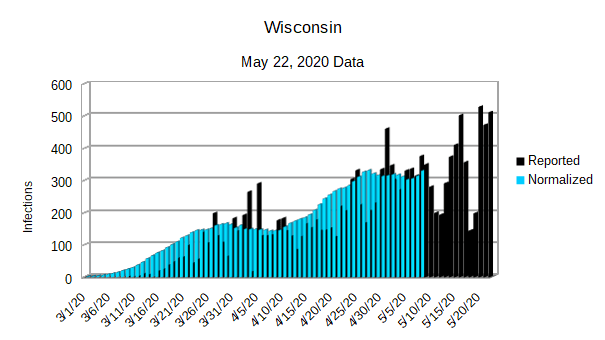
So, let’s have a look at the graphs of the individual states:
Here are a few things to keep in mind while you are looking at the graphs:
- Each graph covers the dates from March 1, 2020 through May 22, 2020.
- Daily reported infections are in black.
- Normalized daily infections are in blue.
- The x-axis indicates the date.
- The y-axis indicates the number of Covid-19 infections (reported and normalized) on that date.
- Each y-axis is best fit. That makes it easier to see the overarching trend of the state. If, however, you want to compare states or understand the magnitude of the infection within a state, you must pay close attention to each y-axis.
- Negative numbers are no longer shown on the graph even though they were used in the calculations to make the normalized portion of the graph.
- The data was received from the Center for Systems Science and Engineering (CSSE) at Johns Hopkins University’s Covid-19 GitHub page on May 23, 2020.





















 Marisa Burnes (dot) com